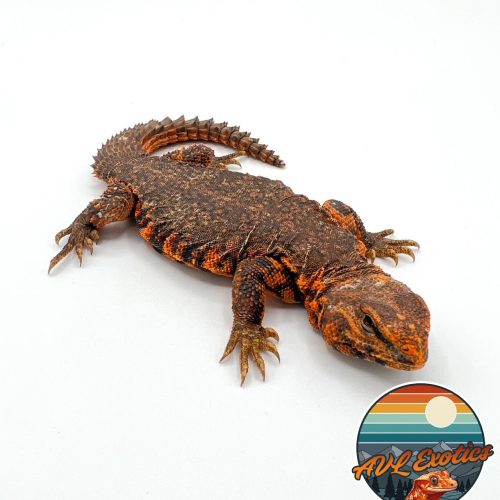
Sudan plated lizards are armored, active, day-loving lizards from eastern and central Africa that usually reach 11 to 14 inches and can live well past 10 years. One adult needs an enclosure of at least 4 × 2 × 2 feet with a basking surface of 105 to 115°F, a cool side of 75 to 80°F, strong UVB, both dry and humid areas within a 20 to 80% range, and at least 4 to 6 inches of diggable sandy soil. They are omnivores: young lizards eat mostly insects, while adults eat more greens.
In this guide
- Quick facts
- Is a Sudan plated lizard the right pet for you?
- Sudan plated lizard enclosure size
- Temperatures and heating
- Lighting and UVB
- Humidity and water
- Best substrate for Sudan plated lizards
- Hides, climbing and décor
- What do Sudan plated lizards eat?
- Handling and taming your Sudan plated lizard
- Health and common problems
- Sudan plated lizard setup checklist
- FAQ
Sudan plated lizard quick facts
| Scientific name | Broadleysaurus major |
|---|---|
| Also called | Broadley's rough-scaled plated lizard, great plated lizard, tawny plated lizard |
| Experience level | Intermediate |
| Adult size | 11–14 in (28–36 cm) typical; up to 24 in (61 cm) reported |
| Lifespan | 10 years or more; 23+ reported |
| Activity | Active by day, ground-dwelling |
| Adult enclosure | 48 × 24 × 24 in (120 × 60 × 60 cm) minimum |
| Basking spot | 105–115°F (41–46°C) surface |
| Cool side | 75–80°F (24–27°C) |
| Night | 60–72°F (16–22°C) |
| Humidity | 20–80%: dry areas 20–40%, moist areas 50–80% |
| UVB | 10–14% T5 HO tube, UVI 4–6 at the basking spot |
| Diet | Omnivore: insects, leafy greens, some fruit and flowers |
| Feeding | By size; adults get insects 2 days and plants 4 days a week |
| Housing | Alone |
Is a Sudan plated lizard the right pet for you?
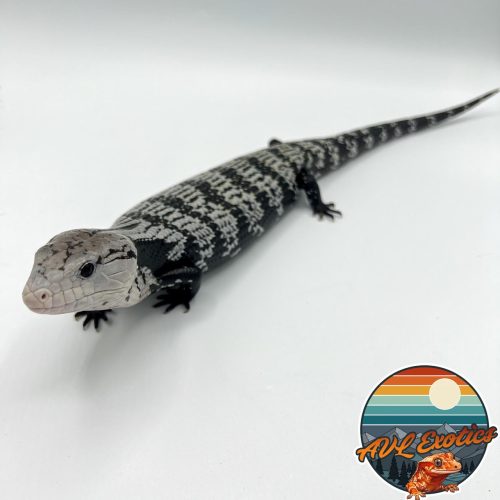
The Sudan plated lizard, whose proper common name is Broadley’s rough-scaled plated lizard, looks like a skink in a suit of armor. Thick, keeled, rectangular scales in neat rows protect its back, legs and tail, its belly scales are smooth and pale, and a fold of softer scales along each side lets the body expand and contract. It is the only member of its genus.
In the wild it lives across eastern and central Africa in rocky, partly open country within woodland, thicket and savanna, from sea level up to about 5,600 feet (1,700 m). It is especially fond of hills, termite mounds, rock piles and crevices. It is active by day and spends its time on the ground, hunting and foraging.
Wild adults typically measure 11 to 14 inches (28 to 36 cm), with some reports of animals up to 20 to 24 inches (51 to 61 cm). Males tend to be a little bigger than females. Most sources quote a lifespan of up to 10 years, but keepers report lizards living past 23 with good care.
These are hardy, busy, curious lizards that are fun to watch. They can also be nervous, and tameness varies a lot: some become tame enough for educational programs, while others stay skittish and are best kept for display. If you want a lizard you can pick up often, a plated lizard may not suit you. Captive breeding is still uncommon, so many plated lizards in the trade were wild-caught or hatched from eggs laid by wild-caught females.
Sudan plated lizard enclosure size
One adult Sudan plated lizard needs an enclosure of at least 4 × 2 × 2 feet (120 × 60 × 60 cm), or 8 square feet of floor. That is a practical minimum: a British code of practice calls for far more, around 60 × 40 × 30 inches (150 × 100 × 75 cm), so give as much extra room as you can. These lizards cover a lot of ground in the wild and will use every inch.
A front-opening enclosure is best, so you are not reaching down from above. A juvenile can go straight into an adult-sized enclosure as long as it has plenty of hiding places; young plated lizards are especially active and will happily run the length of it, particularly when chasing live food.
Keep one per enclosure. Sudan plated lizards are mostly solitary, and lizards forced to share space, even a doubled enclosure, can stress each other and fight, with serious or fatal injuries. Do not house them with other species either. They are sometimes kept with bearded dragons because the two are hardy and come from similar climates, but they do not share the same habitat or needs.
Temperatures and heating
Sudan plated lizards need a basking surface of 105 to 115°F (41 to 46°C), a cool side of 75 to 80°F (24 to 27°C) and nights of 60 to 72°F (16 to 22°C). Put the heat lamps at one end so the temperature falls away toward the other.
Heat lamps. Halogen or incandescent flood bulbs give the deep, sun-like heat these lizards need. Use at least two side by side, so the warm patch covers the whole body. With the basking surface 8 to 12 inches (20 to 30 cm) below the bulbs, 90 to 100-watt halogens or 150-watt spot bulbs are a sensible start, but room temperature, enclosure height and the bulbs themselves all play a part, so expect to try at least two wattages.
Basking surface. A large, flat piece of slate or flagstone under the lamps soaks up heat and makes an ideal basking platform.
Night. Run the heat on the same timer as the lights so the enclosure cools naturally after dark. A lightless heater, for example a ceramic heat emitter, is only needed if your room drops below 60°F (16°C) at night.
Measuring. Use an infrared temperature gun for the basking surface and a digital probe thermometer for the air at the warm end. You need both: a hot basking surface is good, but air that is too hot everywhere can kill a lizard from heatstroke if it has nowhere cooler to go.
Lighting and UVB
Sudan plated lizards come from near the equator, where the sun is strong, and they need strong UVB: a UV index (UVI) of 4 to 6 at the basking spot, falling to near 0 in the shadiest areas. They do most of their basking early in the day, ahead of the midday peak.
For an enclosure 24 inches tall, use a 10 to 12% or a 14% T5 HO UVB tube about half the length of the enclosure, mounted on the same side as the heat lamps. Make the basking area the highest point in the enclosure and the closest to the tube. Approximate distances:
| Tube | Above a mesh lid | No mesh |
|---|---|---|
| 10 to 12% T5 HO | 9 to 11 in (23 to 28 cm) | 14 to 17 in (36 to 43 cm) |
| 14% T5 HO | 10 to 12 in (25 to 30 cm) | 14 to 18 in (36 to 46 cm) |
Add 2 to 3 inches (5 to 8 cm) to these figures to allow for the lizard’s own height. Mesh varies, so a UV index meter is the best way to confirm the readings. Never put glass or plastic between the tube and the lizard, and replace the tube about once a year.
Daylight. Add a bright 6500K LED or fluorescent lamp covering at least three-quarters of the enclosure; LEDs are the better choice if you keep live plants. Bright light encourages activity and appetite.
Day length. Twelve hours of light a day all year works well. You can also follow the seasons, with about 14 hours in summer, 12 in spring and fall and 10 in winter, which may help long-term health. Syncing a smart timer to local sunrise and sunset is the simplest way to do it.
Humidity and water
Sudan plated lizards do best with a humidity range of 20 to 80% across the enclosure: dry areas at 20 to 40% and damp areas at 50 to 80%. Their native range averages 40 to 60% even in the dry season, so they need access to moisture as well as dry ground.
- Mist the enclosure with distilled water from a pump sprayer as needed.
- Dampen the bottom layer of substrate: cut a notch in one end of a thin PVC pipe, stand it upright with the notch on the floor, and pour water down it every week or two. The moisture wicks upward, raising humidity and making the soil easier to burrow in. Seal the enclosure floor with 100% silicone first so it cannot leak.
- Add a humid hide on the cool side, lined with damp sphagnum moss that you replace every week or two.
Place a digital hygrometer probe at the cool end, where humidity is naturally highest. A handheld hygrometer is handy for spot checks elsewhere.
Water bowl. Give a shallow bowl no deeper than the lizard’s back, filled with tap, spring or filtered water rather than distilled or softened water. Change it every other day, or whenever it is dirty. Plated lizards often defecate in their water, so when that happens, clean and disinfect the bowl straight away and refill it.
Best substrate for Sudan plated lizards
Sudan plated lizards need at least 4 to 6 inches (10 to 15 cm) of sandy, diggable substrate. Some keepers go deeper, up to about a third of the enclosure’s height, such as 10 to 12 inches in a 36-inch tall enclosure, which allows proper burrows.
In the wild they run and dig on sandy, nutrient-poor soil, so mimic that:
- Best: a mix of 50% play sand, 30% plain topsoil and 20% reptile burrowing clay, or an arid bioactive substrate. A well-run bioactive setup can go years without a full substrate change.
- For quarantine only: paper towels or newspaper, which are cheap and easy to keep clean but no good long term.
- Avoid: calcium or vitamin sand, crushed walnut shell, coconut fiber and reptile carpet.
A good substrate also cushions the feet, helps wear down the nails, holds some humidity and lets the lizard dig, all of which matter to its well-being.
Many plated lizards pick one corner as a toilet. Once you know where it is, a patch of sand or a shallow litter tray there makes cleanup easy.
Hides, climbing and décor
A bare enclosure leaves a plated lizard bored and insecure. Décor gives it places to hide, climb, dig and explore, and makes the enclosure more attractive too.
- Hides: essential, especially for young lizards. Each should fit the whole body but feel snug. In the wild they shelter in burrows, termite mounds and rock piles.
- Cork flats: stack them to create crevices. Cork is light and safe if it shifts, but gluing pieces together with 100% silicone is still wise.
- Rocks: they store heat and help keep nails short. Fix stacked rocks in place with aquarium-safe silicone or cement so they cannot slide and crush the lizard.
- Logs and branches: plated lizards live on the ground but climb surprisingly well. Collect wood only from pesticide-free areas, scrub it, and pour boiling water over it before use. Avoid pine and cedar.
- Plants: wild plated lizards shelter under shrubs and grass clumps. Good non-toxic live plants include aloe, carex and festuca grasses, haworthia, gasteria, echeveria, jade plant, elephant bush, spineless agave, prickly pear, turtle vine and wheatgrass. Mist them weekly. Artificial plants work too; choose heat-resistant ones.
- Leaf litter: oak, magnolia, sea grape or willow leaves from pesticide-free areas add a natural look and something new to rummage through.
- Background: cover clear glass walls, or fit a photo or 3D background, so the lizard does not feel exposed.
What do Sudan plated lizards eat?
Sudan plated lizards are omnivores. Wild ones eat insects and other invertebrates, small lizards, fruit, flowers and leaves. Young, growing lizards need more insects; adults need more plants. Feed by size:
| Size | Insects | Plants |
|---|---|---|
| Under 6 in (15 cm) | Daily | Daily |
| 6 to 12 in (15 to 30 cm) | 5 days a week | Daily |
| 12 to 18 in (30 to 46 cm) | 3 days a week | 4 days a week |
| Over 18 in (46 cm) | 2 days a week | 4 days a week, with 1 day of no food |
At each insect meal, offer only what the lizard eats in about 5 minutes, with each insect no larger than the gap between its eyes. A food-free day does an adult good: overfeeding is as dangerous as underfeeding, so do not give in to begging.
Insects: crickets, dubia and discoid roaches, black soldier fly larvae, mealworms, darkling beetles, silkworms and captive-bred snails. Offer them live, since movement triggers hunting, in an escape-proof bowl, from soft-tipped tongs, or loose once you know how many your lizard eats. Treats, less than once a month: superworms, hornworms, waxworms, butterworms, quail eggs, boiled egg, and feeder anoles or geckos.
Greens to feed often: arugula, bok choy, collard, endive, escarole, kale, mustard and turnip greens, cress, watercress, pea shoots and de-spined cactus pads. Now and then: bell pepper, peeled cucumber, zucchini, grated raw squash, carrot or yam, dandelion and carrot greens, swiss chard, herbs such as basil, cilantro, parsley and mint, and pesticide-free clover. Slice hard vegetables into ribbons; leave leaves whole for the lizard to tear.
Fruit and flowers: plated lizards love bright red, orange and yellow foods, but fruit is sugary, so keep it to once a week or less. Try mango, papaya, peaches, figs, grapes, berries and prickly pear, and flowers such as hibiscus, dandelion, nasturtium, pansy, rose petals, carnation and rose of Sharon. Never feed a flower you cannot identify.
Never feed avocado, onion, mushrooms, rhubarb or citrus. Skip lettuce, which can cause diarrhea, and spinach, whose oxalates bind calcium and can harm the kidneys.
Supplements. Because the lizard has UVB, use a plain reptile calcium powder with no phosphorus or vitamin D3, and dust every insect at every feeding by shaking them gently in a bag with a little powder. Add a reptile multivitamin as directed on the label. Gut-load feeder insects with a commercial insect diet for 2 to 3 days before use.
Handling and taming your Sudan plated lizard
Sudan plated lizards are curious and active but can be nervous, and juveniles are often jumpy and defensive. They rarely bite, but they will whip their tail, which can startle you. Most grow calmer as they get bigger and more confident, and patient, consistent handling speeds that along.
- Let it see you. Keep the enclosure in a room you use every day, so the lizard gets used to you as a normal part of its world.
- Use food. Plated lizards are very food-motivated and quickly learn to take insects from tongs. Bright fruit and flowers make excellent rewards.
- Start slowly. Do not handle a new lizard for 2 weeks, or until it is eating regularly. Then begin with sessions of 5 minutes or less, building up to 15 minutes as it relaxes. If it is afraid of hands, gloves or a towel can help.
- Hold securely. Cradle the body so all four feet rest on you, with most of the tail supported too. If it starts to scramble, gently press its legs flat against its sides.
- Do not reward mess. If it defecates on you, resist putting it straight back, or it learns that this is how to escape.
- Try floor time. Sitting in an empty bathtub lined with a towel while the lizard roams around you for 15 to 30 minutes helps it get used to being close to you. Disinfect the tub afterward.
Progress can feel slow, so keep sessions calm, short and regular. Wash your hands with soap after every session.
Health and common problems
Reptiles hide illness until it is serious, so keep watch. Weigh your plated lizard weekly, as sudden weight loss often signals a problem, and keep a weekly record of feeding, behavior and shedding.
- Parasites: likely in wild-caught lizards, which carry heavier parasite loads than captive-bred ones. Have a reptile vet check a new lizard.
- Obesity: the result of too much food or too many fatty insects and treats. Stick to the schedule, fast day included.
- Metabolic bone disease: linked to too little UVB or calcium.
- Respiratory infection, shedding problems and lethargy: often a sign that temperatures or humidity are off.
- Mites and tail loss are also worth knowing about.
When choosing a lizard, avoid any younger than 3 months, as older ones handle a move better. Look for an alert lizard with clear, open eyes, straight limbs, no sunken look or jutting hip bones and spine, no blackened toes or tail tip, no open wounds and no clumsiness. A healthy plated lizard wriggles to get free when held. Find a reptile vet before you need one, and keep a basic reptile first-aid kit at home.
Sudan plated lizard setup checklist
Have the enclosure set up and running before your lizard comes home.
- Front-opening enclosure, at least 4 × 2 × 2 ft
- Two halogen flood heat bulbs and ceramic-socket fixtures
- 10 to 12% or 14% T5 HO UVB tube in a reflective fixture
- 6500K LED daylight lamp
- Digital timer for the lights and heat
- Infrared temperature gun and a digital thermometer and hygrometer
- Play sand, topsoil and burrowing clay, enough for 4 to 6 inches
- Large flat stone for basking
- At least two hides, cork flats, logs, branches and plants
- Pump sprayer and sphagnum moss for a humid hide
- Large shallow water dish and an escape-proof insect bowl
- Plain calcium powder and a multivitamin
- Soft-tipped feeding tongs
- Kitchen scale and reptile-safe disinfectant
Getting set up? Find what you need in our shop: Live lizards, Enclosures, Heating & Lighting, Substrate & Bedding, Décor & Hides, Food & Feeders, Supplements. Questions about your setup? Ask us, in the shop in Asheville or online.
Sudan plated lizard FAQ
How big do Sudan plated lizards get?
Wild adults typically measure 11 to 14 inches (28 to 36 cm), and some reports describe lizards up to 20 to 24 inches. Males are usually a little larger than females.
How long do Sudan plated lizards live?
They are often said to live up to 10 years, but with good care keepers report plated lizards living past 23.
What size enclosure does a Sudan plated lizard need?
At least 4 × 2 × 2 feet (120 × 60 × 60 cm) for one adult, and larger is strongly recommended.
What do Sudan plated lizards eat?
They are omnivores. Feed live insects plus leafy greens and vegetables, with fruit and flowers no more than once a week. Young lizards eat insects most days, while adults get insects twice a week and plants four days a week.
Can Sudan plated lizards live together?
No. They are mostly solitary and can fight and seriously injure each other, so keep one per enclosure and do not mix them with other species.
Are Sudan plated lizards good for beginners?
They are hardy and easy to feed, but they need a large enclosure, strong heat and UVB, and patient taming, as many are nervous. They suit a keeper with some experience or a beginner willing to research.
Sources: ReptiFiles, Sudan Plated Lizard Care Guide. This guide is general care information, not veterinary advice. If your animal seems unwell, see a reptile veterinarian.