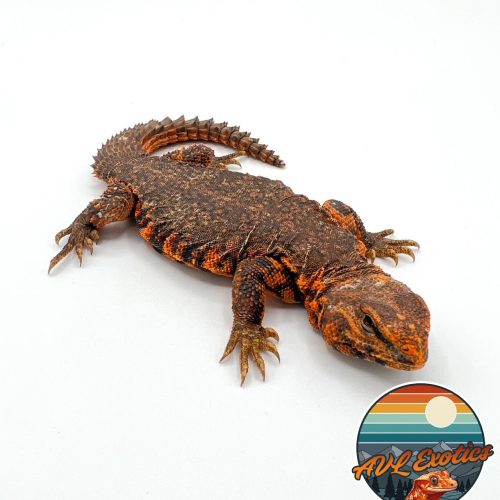
Ackie monitors are small, bold monitor lizards from northern Australia that grow to about 2 feet and live 15 years or more. One adult needs an enclosure of at least 5 × 2.5 × 4 feet with 12 to 24 inches of moist, diggable substrate, a basking surface of 158 to 172°F, a cool side of 75 to 82°F, strong UVB giving a UV index of 4 to 6 at the basking spot, and air humidity of 20 to 50%. Feed a varied diet of insects, with occasional lizards and other whole prey, daily for youngsters and every other day for adults.
In this guide
- Quick facts
- Is an ackie monitor the right pet for you?
- Ackie monitor enclosure size
- Can ackie monitors live together?
- Ackie monitor temperatures and heating
- Lighting and UVB for ackie monitors
- Humidity, substrate moisture and water
- Best substrate for ackie monitors
- Hides, climbing and décor
- What do ackie monitors eat?
- Handling and taming your ackie monitor
- Ackie monitor health and common problems
- Ackie monitor setup checklist
- FAQ
Ackie monitor quick facts
| Scientific name | Varanus acanthurus |
|---|---|
| Also called | Ridge-tailed monitor, spiny-tailed monitor, red ackie, yellow ackie |
| Experience level | Intermediate |
| Adult size | About 24 in (60 cm), up to 30 in (76 cm) |
| Lifespan | 15 years or more |
| Activity | Active by day; digs and climbs |
| Adult enclosure | 60 × 30 × 48 in (150 × 75 × 120 cm) minimum |
| Basking spot | 158–172°F (70–78°C) surface |
| Warm side | 84–100°F (29–38°C) air |
| Cool side | 75–82°F (24–28°C) |
| Night | All heat and lights off |
| Humidity | 20–50% air; 80% or more in burrows |
| UVB | 12% or 14% T5 HO tube, UVI 4–6 at the basking spot |
| Diet | Insects, plus occasional lizards and other whole prey |
| Feeding | Daily to 6 months, then every other day |
| Housing | Alone; pairs only for experienced keepers |
Is an ackie monitor the right pet for you?
Ackie monitors pack a big personality into a small lizard. They are curious, fast and very intelligent, they remember how you have treated them, and once they trust you most become bold, interactive pets that rarely bite. Adults are usually about 2 feet (60 cm) long, ranging from 17 to 30 inches (44 to 76 cm), with males and red ackies tending to be larger. With good care they live at least 15 years.
They are not a minimal-effort reptile. Monitors do poorly in bare, basic setups, and an ackie needs a large custom enclosure, a deep layer of damp soil to dig in, an extremely hot basking spot, strong UVB and a constant supply of live insects. If you cannot provide all of that, plus plenty of enrichment, choose another lizard.
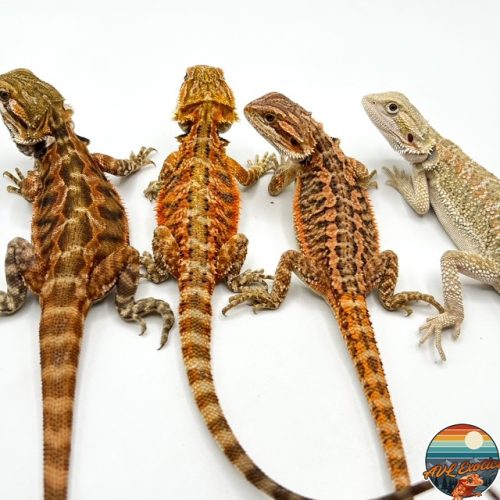
Wild ackies live across the north, west and center of northern Australia in dry, rocky country with spinifex grass, sheltering in rock crevices and burrows. When threatened, an ackie wedges itself into a crack and blocks the entrance with its spiny tail. Australia does not allow their export, so almost all ackies sold elsewhere are captive bred. “Red” and “yellow” ackies describe color lines rather than true subspecies, and young ackies change color as they grow, so ask to see the parents to know what yours will look like.
Ackie monitor enclosure size
One adult ackie monitor needs an enclosure at least 5 feet long, 2.5 feet deep and 4 feet tall (150 × 75 × 120 cm). That gives an active ground lizard room to roam, dig and climb, and enough length for a real gradient despite the very hot basking spot. Bigger is always better.
- Substrate dam: the front needs a barrier 24 inches (60 cm) high to hold the soil in. A thick glass barrier lets you see your ackie in its burrows.
- Doors and ventilation: choose front-opening doors and a screen top or plenty of vents so heat does not build up.
- Custom build: enclosures this shape are rarely sold ready-made, so plan to order a custom one or build your own.
Hatchlings can go straight into an adult-sized enclosure, which saves buying several as your ackie grows.
Can ackie monitors live together?
They can, but they do not need to, and new keepers should keep one ackie per enclosure. Ackies do not get lonely. Experienced keepers sometimes pair a male and female, but that needs a much larger enclosure, close watching and a plan if it fails. Never house two males together, as they will fight, sometimes to the death, and females kept together often clash as well. Ackies also eat smaller ackies, so never mix sizes.
Ackie monitor temperatures and heating
Ackies need a basking surface of 158 to 172°F (70 to 78°C), one of the hottest of any pet lizard, and a cool side of 75 to 82°F (24 to 28°C). Turn all heating off at night.
- Basking surface: 158 to 172°F (70 to 78°C)
- Warm side air: 84 to 100°F (29 to 38°C)
- Cool side: 75 to 82°F (24 to 28°C)
These figures sound extreme, but ackies bask in short bursts many times a day, then retreat to cooler areas and burrows. Without a cool zone an ackie can die of heat stroke, while an enclosure kept too cool leads to poor digestion, weight gain, gout and a weak immune system.
Heat lamps. Use at least two high-wattage halogen flood bulbs side by side at one end of the enclosure, so the hot patch covers the whole lizard. White halogen bulbs give the deep-reaching infrared of sunlight; ceramic emitters, mats and panels only warm the surface. Use dome fixtures with ceramic sockets rated for the wattage, and guard any bulb the ackie could touch. If you need to dim a bulb by half or more to get the right temperature, switch to a lower wattage. New bulbs usually lose about 5°F (3°C) of output in the first few days and keep fading, so check the basking temperature regularly.
The basking platform. Directly under the lamps, build a stack of flat layers, such as flagstone, slate or concrete pavers, separated by wooden spacers about as tall as your ackie, so it can bask on top and squeeze between the layers. Dark stone holds heat best. Make the top the highest point in the enclosure and anchor the whole stack to the enclosure floor, because an ackie digging under a loose stack can be crushed if it collapses.
Measuring. Read the basking surface with an infrared temperature gun once the stone has warmed for a couple of hours, and the air at the basking area with a digital probe thermometer.
Winter cooling. Ackies do not brumate, but a cooler winter seems to help their hormones and breeding. We recommend gradually shortening the heating period through winter, down to about 4 hours a day, while still offering food.
Lighting and UVB for ackie monitors
Ackies need strong UVB, with a UV index (UVI) of 4.0 to 6.0 at head height on the basking spot and lower readings elsewhere. Use a 12% or 14% T5 HO tube in a reflector fixture, about half the length of the enclosure and positioned above the basking spot alongside the heat lamps. Measure from the tube to the ackie’s head as it sits on the basking surface:
| Tube | Above a mesh top | No mesh in the way |
|---|---|---|
| 10% or 12% T5 HO | 9 to 11 in (23 to 28 cm) | 14 to 17 in (36 to 43 cm) |
| 14% T5 HO | 10 to 12 in (25 to 30 cm) | 14 to 18 in (36 to 46 cm) |
A UV index meter is the best way to confirm the reading. Do not rely on vitamin D3 supplements instead of UVB: with UVB, an ackie makes exactly the vitamin D3 it needs, while dosing by diet risks too little or too much.
Day length. Run the lights for 12 hours a day, or follow the seasons, from about 10.5 hours in winter to 13.5 hours in summer. Outlet timers make this easy.
Bright light. Heat lamps and UVB do not make an enclosure bright enough for a day-active lizard. Add LED daylight bars of about 6400K; two 22 inch (56 cm) bars suit a 5 foot enclosure. Keep the basking area the brightest spot, and never use colored bulbs, even at night.
Humidity, substrate moisture and water
Keep the average air humidity in an ackie enclosure at 20 to 50%, measured in the middle of the enclosure within 12 inches (30 cm) of the ground. Short dips and spikes outside that range are harmless. Moisture inside the substrate matters more: it should be damp enough to clump, so that burrows hold their shape and stay at 80% humidity or more.
Wild ackies avoid drying out by resting in humid burrows. Bury a hygrometer probe in the substrate and re-wet the soil with a watering can whenever it drops below 80%. With a glass substrate barrier you can also see the moisture: damp soil looks darker and fogs the glass.
Drinking water. Ackies get much of their water from food and burrows, but they still need a shallow bowl of fresh water at all times, shallow enough that it would not cover the lizard’s back. Spring, filtered or tap water are all fine; avoid distilled or softened water. Change it whenever it is soiled and scrub the bowl weekly with a veterinary disinfectant.
Best substrate for ackie monitors
Ackies need deep, damp, packable substrate to burrow in: at least 12 inches (30 cm) for a male and 18 inches (46 cm) for a female, and ideally about 24 inches (61 cm). Burrowing keeps them from overheating, keeps them hydrated and wears their claws down.
Females need the extra depth because they often lay eggs even without a male. If the soil is too shallow for her to dig a nest, a female may hold her eggs, which can lead to egg binding and death.
- Best: a homemade mix of two-thirds topsoil with no additives and one-third play sand; a very fine natural sand; or a bioactive arid mix. Adding up to 20% powdered clay helps burrows hold. Whatever you use, mix in water until it clumps.
- In a pinch: play sand alone, though it holds burrows less well.
- Avoid: coconut fiber, walnut shell, bark, wood shavings or mulch, gravel, paper towels, reptile carpet and, above all, calcium sand.
Fine, natural substrates do not cause impaction in a healthy ackie that is warm and hydrated; large particles such as bark and mulch are more of a risk. Remove waste, uneaten food and soiled substrate daily, and replace all of it every 12 months, or half of it every 6 months. A bioactive setup with clean-up crew insects needs only regular upkeep.
Hides, climbing and décor
Ackies spend much of their time hidden, and the more cover you provide, the more secure and outgoing they become. Fill the enclosure so it resembles their rocky, grassy home.
- Hides: cork hollows, curved cork flats, reptile caves or custom hide boxes, all snug. A flat stone laid on the substrate makes a spot to dig under.
- Rocks: for climbing and burrowing beneath. Deep substrate means an ackie can dig itself out if a rock shifts. Scrub collected rocks and spray them with a veterinary disinfectant, but never bake them: trapped air can make them explode.
- Branches and ledges: ackies climb well, so use branches, ledges and a 3D background to make use of the height. Collect branches only from untreated areas, scrub them and dry them in the sun for a few days before use.
- Plants: clumps of grass give the same cover as wild spinifex. Live plants must be tough, drought- and heat-tolerant and nontoxic, such as succulents and grasses, though an ackie will trample many of them. Artificial plants last longer.
What do ackie monitors eat?
Ackie monitors are carnivores that eat mostly insects in the wild, plus a surprising volume of small lizards. Feed a low-fat, varied diet of gut-loaded insects, with occasional whole prey, on this schedule:
| Stage | How often | How much |
|---|---|---|
| Hatchling and juvenile, 0 to 6 months | Every day | As much as it will eat |
| Subadult and adult, over 6 months | Every other day | What it eats in 5 to 10 minutes |
| Breeding female | Every day | As much as she wants |
Ackies can tackle large prey, so offer insects about the size of the lizard’s head or slightly bigger.
- Insects and invertebrates: crickets, dubia and discoid roaches, grasshoppers and locusts, black soldier fly larvae, silkworms, hornworms, mealworms, superworms, isopods, centipedes and scorpions. Live insects give your ackie a hunt; leave loose ones a slice of squash or apple so they do not nibble the lizard.
- Lizards: frozen-thawed feeder anoles or house geckos, or iguana meat. Use frozen rather than live or fresh-killed lizards to avoid passing on parasites.
- Occasional rich foods: quail eggs in the shell, button quail chicks and young mice or rats. They help a female recover after laying but are fattening, so use them sparingly.
- Prepared insectivore diets and canned insects add variety and are handy in an emergency.
Use only captive-bred feeders, never wild-caught insects. Variety is essential: a narrow diet can leave an ackie short of key nutrients.
Supplements. Lightly dust all insects with calcium powder, except hornworms and isopods, which are naturally high in calcium. Eggs, whole prey and prepared diets need no dusting. Now and then, use a multivitamin containing preformed vitamin A (retinol), and a calcium with a low dose of D3 to top up reserves. It is easy to overdo vitamins, so err on the light side. Give insects a complete gut-load diet for a day or more beforehand, with water crystals rather than a dish they could drown in.
Handling and taming your ackie monitor
Ackies are among the easier monitors to tame, but youngsters are naturally jumpy until about a year old, when their instinct to flee from anything large starts to fade. Until then, focus on building trust rather than handling. Consistency counts for more than perfection.
- Give a new ackie a few weeks to settle, then spend time in and beside the enclosure every day, moving slowly. When you work inside it, stay at least 30 minutes, or the ackie learns that hiding makes you leave.
- Rest a hand inside and let the ackie smell and lick it. Do not stare, grab, chase or touch it in the early weeks.
- Once it comes to you, offer a quick chin rub, try tong-feeding, and build up from there. Do not always use food, or it will treat every visit as mealtime.
- Handle it inside the enclosure first. Approach from the side, never from above with a clawed hand, which looks like a bird of prey.
The best way to hold an ackie is to let it walk onto your outstretched arm, guiding it with your other hand and keeping it below your elbow, since ackies will leap from a height. Keep a gentle hold, as they are very fast. Their fine claws can leave small scratches or a mild rash. Wait until a struggling ackie calms down before returning it, so struggling is not rewarded. Save forced handling for vet trips and emergencies; training it to use a removable hide box makes those easier.
Body language. Bolting means fear, closed eyes mean stress, tail lashing is a defensive warning, head jerking is a dominance display, and steady tongue flicking shows interest. Bites are rare and minor. Regular enrichment, such as live insects to hunt, puzzle feeders and time in a safe play pen, is essential for such a clever lizard.
Ackie monitor health and common problems
Weigh your ackie regularly and keep notes on its weight, appetite, droppings, sheds and behavior, since sudden weight loss is often the first sign of illness. Most problems trace back to husbandry, so good setup is the best prevention.
A healthy ackie has clear eyes, a muscular body, a plump tail, a straight spine and limbs, firm dark droppings with a small white urate, and breathes with its mouth closed. It moves freely without dragging its belly and is alert and curious. When buying, also check that the hip bones do not show, the toes are not swollen and there are no mites.
- Egg binding: a female that cannot find deep enough soil to nest in may retain her eggs.
- Obesity and gout: from too much rich food or temperatures that are too low.
- Metabolic bone disease: from too little UVB or calcium.
- Impaction, parasites, mites, respiratory infection, prolapse and shedding problems: all need a vet.
Buy from a breeder who specializes in ackies, and if you keep other reptiles, quarantine a new ackie away from them for 3 months or more. Find a reptile vet before you need one and book a check-up every year.
Ackie monitor setup checklist
Set everything up and check temperatures and substrate moisture before your ackie comes home.
- Front-opening enclosure of at least 5 × 2.5 × 4 ft with a 24 inch substrate dam
- Two high-wattage halogen flood bulbs in a dual dome fixture with ceramic sockets
- Materials for an anchored stone basking stack
- 12% or 14% T5 HO UVB tube about half the enclosure length, in a reflector fixture
- Two LED daylight bars of about 6400K
- Outlet timers and a surge protector
- Infrared temperature gun, digital probe thermometer and hygrometers
- Topsoil and play sand or fine natural sand for 12 to 24 inches of depth
- Watering can
- Cork hides, rocks, branches, ledges and plants
- Shallow water bowl and an escape-proof feeding dish
- Calcium, multivitamin, gut-load and feeding tongs
- Veterinary disinfectant
Getting set up? Find what you need in our shop: Live lizards, Enclosures, Heating & Lighting, Substrate & Bedding, Décor & Hides, Food & Feeders, Supplements. Questions about your setup? Ask us, in the shop in Asheville or online.
Ackie monitor FAQ
How big do ackie monitors get?
Most adults are about 2 feet (60 cm) long including the tail, with a range of roughly 17 to 30 inches (44 to 76 cm). Males and red ackies tend to be larger.
How long do ackie monitors live?
With good care, ackie monitors live at least 15 years.
How big of an enclosure does an ackie monitor need?
One adult needs at least 5 × 2.5 × 4 feet (150 × 75 × 120 cm), with a 24 inch substrate dam to hold 12 to 24 inches of soil. Juveniles can go straight into an adult-sized enclosure.
What do ackie monitors eat?
Mostly live insects such as roaches, crickets, locusts and worms, dusted with calcium, plus occasional frozen-thawed lizards. Eggs, chicks and young rodents are occasional treats.
Do ackie monitors need UVB?
Yes. They need strong UVB from a 12% or 14% T5 HO tube, giving a UV index of 4 to 6 at the basking spot.
Can ackie monitors live together?
Beginners should keep one per enclosure. Males must never be housed together, females often clash, and pairs need a much larger enclosure and experience.
Sources: ReptiFiles, Ackie Monitor Care Guide. This guide is general care information, not veterinary advice. If your animal seems unwell, see a reptile veterinarian.